What the UK “Game On” Report Means for Community Sport in Canada
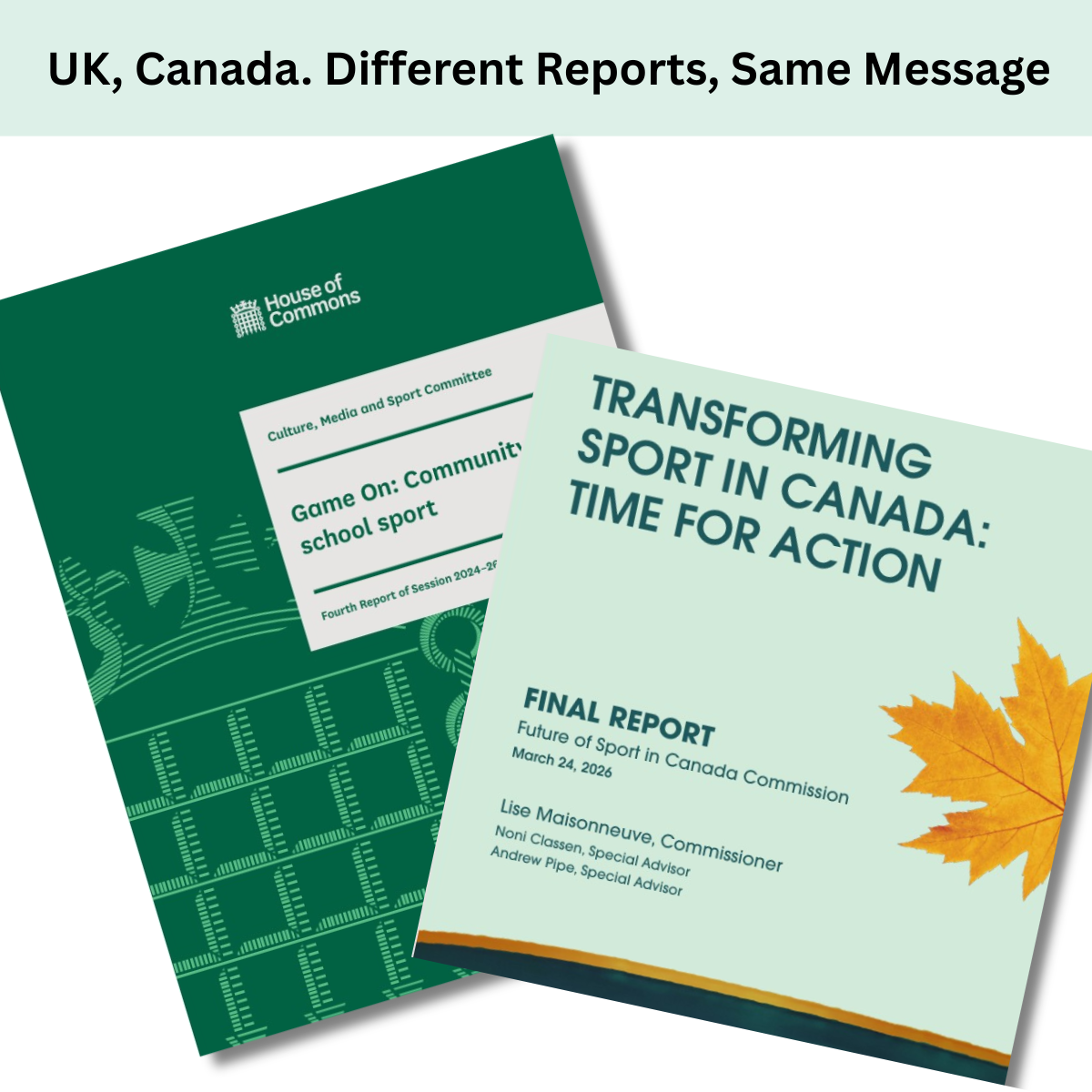
Last week, I shared some early thoughts on the UK’s Game On: Community and School Sport report.
At a high level, the message was clear:
👉 Sport is not a cost. It’s an investment.
And more importantly:
👉 The opportunity now is to activate what we already have — in a more connected, intentional way.
After spending more time with the report, I wanted to take a step back and look at it through a different lens:
👉 What does this actually mean at the community and family level?
1. The System Already Exists — We Just Don’t See All of It
One of the biggest takeaways from the report is the idea that we don’t necessarily need to build more…
👉 We need to use what already exists, better.
At the grassroots level, that system is already in place:
- Local leagues and clubs
- Volunteer coaches and organizers
- School gyms, fields, and community spaces
- Families looking for opportunities
But here’s the challenge:
👉 A lot of this system is still invisible or disconnected
Families don’t always know what’s available.
Organizations aren’t always connected to each other.
And decision-makers don’t always have the full picture.
2. Schools + Community Sport = A Missed Connection
The report places a strong emphasis on connecting school sport with community-based sport.
From a community perspective, this just makes sense.
Think about it:
- Schools already have space
- Community organizations already have programming
- Families are already looking for opportunities
But too often, these pieces operate separately.
👉 The opportunity is not to create something new
👉 It’s to connect what already exists
That’s where things can start to scale quickly—without major new investment.
3. The Expectations Are Real — So Is the Reality
Across the board, there is growing focus on:
- Inclusion and accessibility
- Safe sport
- Quality coaching and programming
- Long-term participation and development
These are all important.
But at the community level, most organizations are still focused on:
- Finding enough coaches
- Organizing schedules
- Registering players
- Making sure kids have a place to play
👉 That’s the reality
So the question becomes:
👉 How do we better support the people delivering all of this?
4. This All Comes Back to Visibility
If there’s one thread that connects everything, it’s this:
👉 We can’t improve what we can’t see
Without a clear picture of what exists:
- It’s harder for families to find programs
- It’s harder for organizations to grow
- It’s harder for communities to plan
- It’s harder for funders and partners to align support
And that’s where a lot of opportunity is currently being missed.
5. A Practical Way Forward
The UK report talks about systems, investment, and coordination.
At the grassroots level, that doesn’t have to be complicated.
It can start with something simple:
👉 Making community sport more visible
👉 Making it easier to find
👉 Making it easier to connect
Because when you can see the full picture:
- You can identify gaps
- You can support what’s working
- You can connect the right people and resources
And you can start to build a system that actually works together.
Closing
The UK report reinforces something many of us are already seeing firsthand:
👉 The system is already there
👉 It just needs to be better connected
If we can do that—
If we can make community sport more visible, more accessible, and more coordinated—
Then we don’t just increase participation.
👉 We strengthen communities
👉 We support families
👉 And we give volunteer-run organizations a better chance to succeed
This is exactly the space I’ve been focused on with Sportall.ca—helping make community sport easier to find, connect with, and support.