When It’s More Than “Just a Bump”: A Parent’s Guide to Concussions & Rowan’s Law
There are moments in sport—and in everyday play—that happen fast.
A collision.
A fall.
A ball, a bike, an elbow… something you didn’t see coming.
And then comes the question every parent or guardian faces:
“Are they okay?”
A Personal Reflection (Why This Matters to Me)
Before I understood anything about concussions, I had already experienced several.
By the time I was a teenager, I had suffered three serious head injuries.
Two happened during schoolyard soccer games—ironically, a sport I didn’t even play competitively. One moment I was running toward the play… the next, I was on the ground, having blacked out after being struck in the face by a kicked ball.
Another time, I took an elbow to the back of the head going for a loose ball. Again, I blacked out.
The most serious came shortly after. I was hit by a cyclist who lost control on a sidewalk. I don’t remember what happened for several minutes afterward. I regained awareness on a neighbour’s lawn, far from where I was hit.
That injury resulted in a cracked skull, a fractured orbital bone, and a long recovery that lasted well over a year.
What Was Missing Back Then
This was the late 1970s.
There were no concussion protocols.
No return-to-play guidelines.
No formal education for parents, coaches, or schools.
And most importantly:
No clear understanding of how serious a concussion could be.
What We Know Now (And Why It Matters)
Today, we know much more—and in Ontario, we have legislation designed to protect young athletes:
👉 Rowan’s Law
Named in memory of Rowan Stringer, Rowan’s Law helps ensure that athletes, coaches, and parents understand:
- how to recognize a concussion
- what to do when one is suspected
- how to safely return to sport
But here’s something that often gets overlooked:
Parents and guardians are one of the most important parts of this entire process.
The Reality: Kids Don’t Always Speak Up
From experience—as a player and as a coach—this is one of the hardest truths:
Kids don’t always tell you when something is wrong.
Sometimes it’s because:
- they want to keep playing
- they don’t want to let their team down
- they don’t want to appear “weak”
- they don’t fully understand what they’re feeling
Even high-performing, confident kids can stay silent.
That’s why awareness at home matters just as much as awareness on the field.
What Parents & Guardians Should Watch For
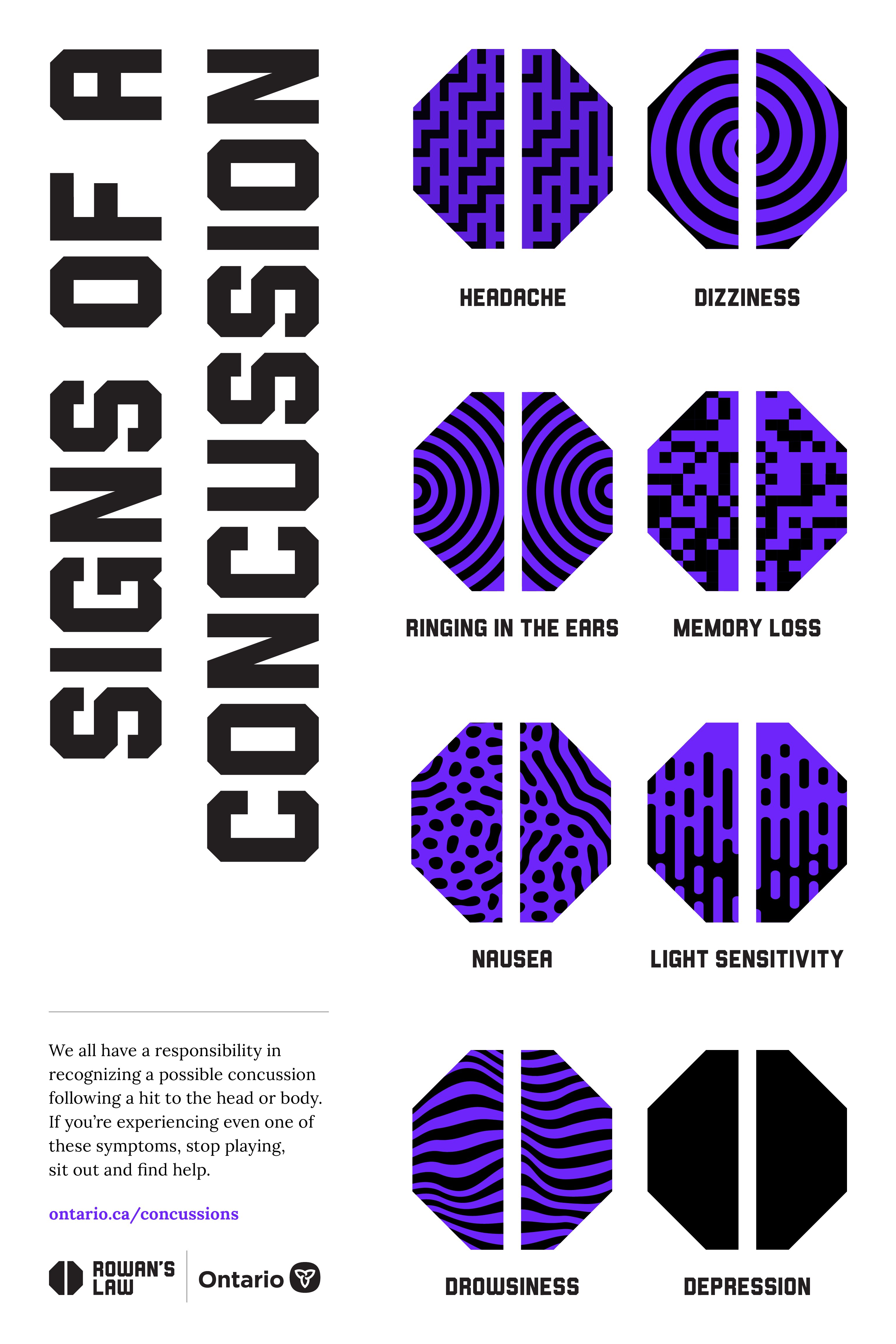
According to trusted Canadian sources, concussion symptoms can include:
- Headache or pressure in the head
- Dizziness or balance problems
- Nausea or vomiting
- Confusion or memory issues
- Sensitivity to light or noise
- Unusual fatigue or emotional changes
Symptoms don’t always show up immediately. They can appear hours—or even days—later.
What To Do If You Suspect a Concussion
The guidance across Canadian organizations is clear and consistent:
1. When in doubt, sit them out
If there’s any suspicion of a concussion, your child should stop participating immediately.
2. Seek medical assessment
A qualified healthcare professional should evaluate your child as soon as possible.
3. Follow a gradual return-to-school and return-to-sport plan
Recovery is not just physical—it includes cognitive rest too.
4. Communicate early and clearly
Make sure coaches, teachers, and program leaders are aware.
Your Role Is Bigger Than You Think
One of the most powerful things a parent or guardian can do is create an environment where a child feels safe to speak up.
That means:
- reinforcing that health comes before sport
- removing fear around “losing their spot”
- supporting modified participation (when appropriate)
- staying patient during recovery
When a child knows you have their back, they’re far more likely to tell you when something isn’t right.
Working With Coaches & Organizations
If your child plays multiple sports—or is part of different programs—communication becomes even more important.
Helpful steps:
- Share medical guidance with each coach
- Ask about their concussion protocol (they should have one)
- Confirm they are aligned with Rowan’s Law requirements
- Clarify expectations for return-to-play
This doesn’t need to be confrontational.
In most cases, it’s collaborative.
Everyone wants the same outcome:
a healthy, confident child.
Trusted Canadian Resources for Parents
If you want to learn more, these are excellent, evidence-based resources:
- Government of Ontario – Rowan’s Law overview and parent guides
- Parachute Canada – National leader in concussion education and protocols
- Holland Bloorview Kids Rehabilitation Hospital – Pediatric concussion resources and recovery guidance
- Canadian Paediatric Society – Medical guidance on concussion care
These resources are practical, clear, and designed for real-life situations.
Final Thought
Most concussions don’t come from dramatic, high-level sport moments.
They happen in:
- schoolyards
- practices
- casual play
- everyday activities
Just like mine did.
The difference today is this:
We know better.
And when parents, coaches, and organizations work together—
we can make sport and recreation safer, without taking away everything that makes it great.
One Simple Takeaway
👉 Make it easy for your child to tell you when something doesn’t feel right.
That single step can change everything.