The Real Reason Community Sport Doesn’t Get Funded (And How We Fix It)
There’s been a lot of conversation lately about new investments in Canadian sport.
Hundreds of millions of dollars.
New commitments.
New priorities.
New expectations around safety, inclusion, mental health, and accountability.
And all of it matters. All of it is important.
But there’s something sitting just below the surface that we’re not talking about enough:
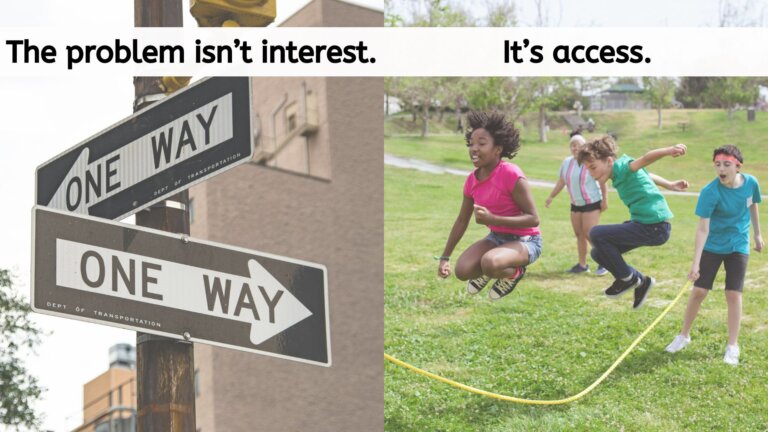
Who can actually access that funding—and who can’t?
The Reality
Most funding—whether government, grants, or sponsorship—is built around:
- Replies
- Clearly defined program structures
- Measurable outcomes
- KPI tracking and reporting
That means funding naturally flows toward:
👉 Established organizations
👉 Structured programming
👉 Systems that already have infrastructure
In other words…
Funding flows to what is already visible, organized, and measurable.
The Gap
Now compare that to community-level sport and recreation.
The reality?
- Thousands of local programs
- Volunteer-run
- Light structure
- Limited administration
- No centralized visibility
These are the programs where:
👉 Kids first play
👉 Families first engage
👉 Coaches and volunteers begin their journey
And yet…
This is the least visible, least connected, and least fundable part of the system.
Not because it lacks value.
But because:
It lacks infrastructure.
The Irony
At the same time, we’re hearing that the sport system needs to be “fixed.”
- Safer environments
- Better coaching
- Stronger culture
- More inclusive access
And billions are being directed toward solving those challenges…
…primarily within the existing system.
But what if we’re trying to fix outcomes too far downstream?
The Reframe
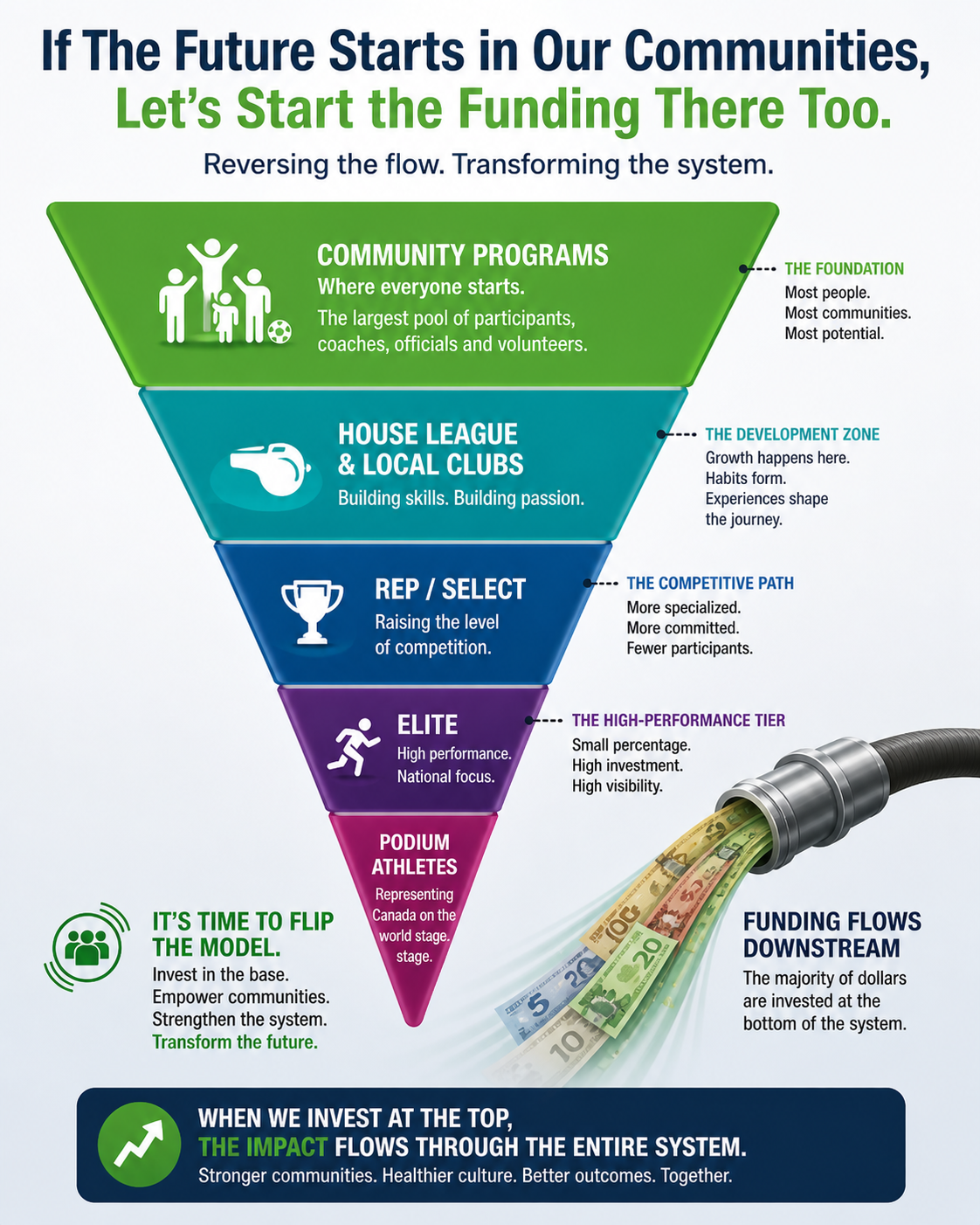
What if the highest return on investment isn’t at the top of the system…
…but at the point of entry?
Because that’s where:
- Culture is formed
- Behaviours are learned
- Expectations are set
- Experiences shape long-term participation
The Shift
Imagine if community sport wasn’t invisible.
Imagine if it was:
- Discoverable
- Connected
- Supported
- Structured (without losing its grassroots nature)
Now something changes:
👉 Funders can find it
👉 Programs can be supported
👉 Outcomes can be tracked
👉 Impact can be measured
For the first time…
Grassroots sport becomes fundable at scale.
The Role of Infrastructure
This is where infrastructure matters.
Not heavy systems.
Not bureaucracy.
But a lightweight, accessible layer that:
- Connects organizations
- Creates visibility
- Provides guidance and resources
- Enables consistency without restricting flexibility
Because once that layer exists…
Everything else becomes possible.
The Long-Term Impact
If we build from the ground up:
- Athletes develop in healthier environments
- Coaches learn the right habits early
- Volunteers feel supported and equipped
- Communities become stronger and more connected
And over time?
The system doesn’t need to be “fixed” at higher levels…
Because it was built differently from the start.
Closing
We often talk about transforming sport.
But transformation doesn’t start at the top.
It starts at the first practice.
The first coach.
The first volunteer.
The first experience a child has in sport.
That’s where culture lives.
And right now, that’s the part of the system we see the least.
Maybe the opportunity in front of us isn’t just to fund sport differently…
But to finally connect it.